Successful B2B sales follows a clear flow: find the right companies, prepare them, reach out with relevance and follow up consistently. Each step builds on the previous one, and at every stage there are levers to improve the close rate. What sets modern outreach apart from the classic kind is not a single tool, but the consistency with which every step is prepared and measured, plus the deliberate use of AI and automation where they genuinely save time. This guide describes the entire process from target audience to follow-up and shows where technology helps and where humans remain irreplaceable.
The modern B2B sales process at a glance
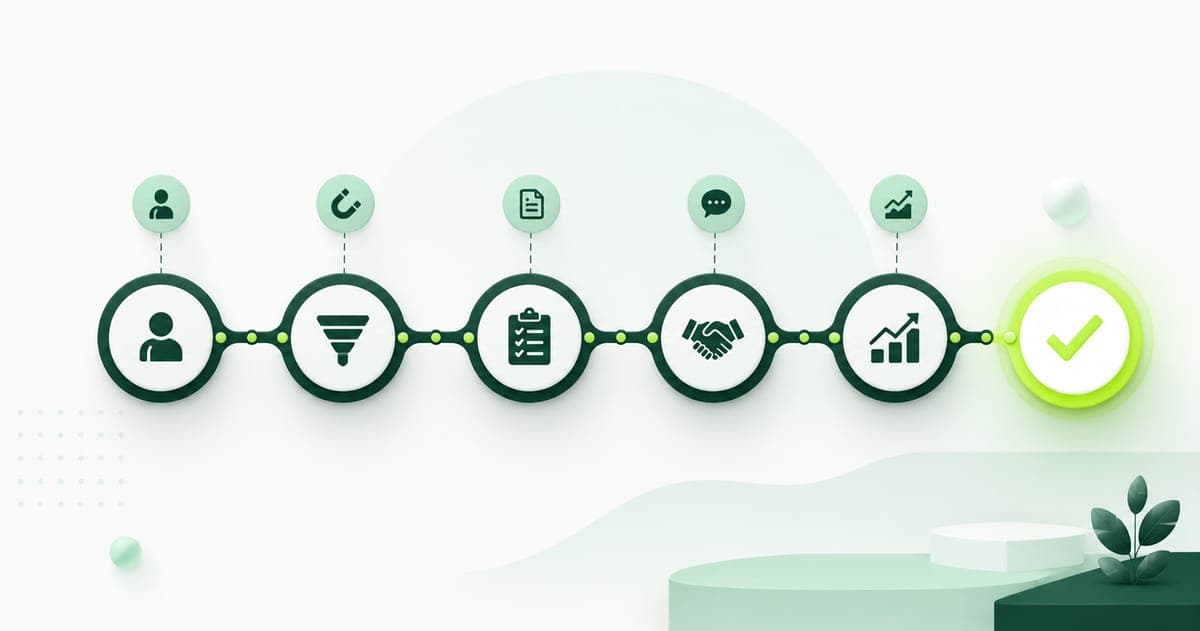
At its core, modern B2B sales consists of five phases: define the target audience, find and research fitting companies, reach out with relevance across several channels, qualify and follow up, and track the pipeline cleanly. The difference from the past lies in pace and precision. Anyone who casts a broad, generic net today drowns in the noise, because decision-makers are flooded with messages. Anyone who reaches out precisely to a few well-researched companies stands out. The following sections go through the phases one by one and show what matters in each.
Ideal customer profile first
Before you sell, define who to. A sharp ideal customer profile saves time and raises the hit rate, because your energy flows into fitting companies rather than random contacts. The profile describes the companies where your offer makes the biggest difference, including the triggers that show the topic is relevant right now. The more precise this picture, the easier every following decision becomes, from selecting companies to research to phrasing the first message. A blurry profile, by contrast, propagates through the entire process and shows up at the end in weak reply rates.
Research beats lists
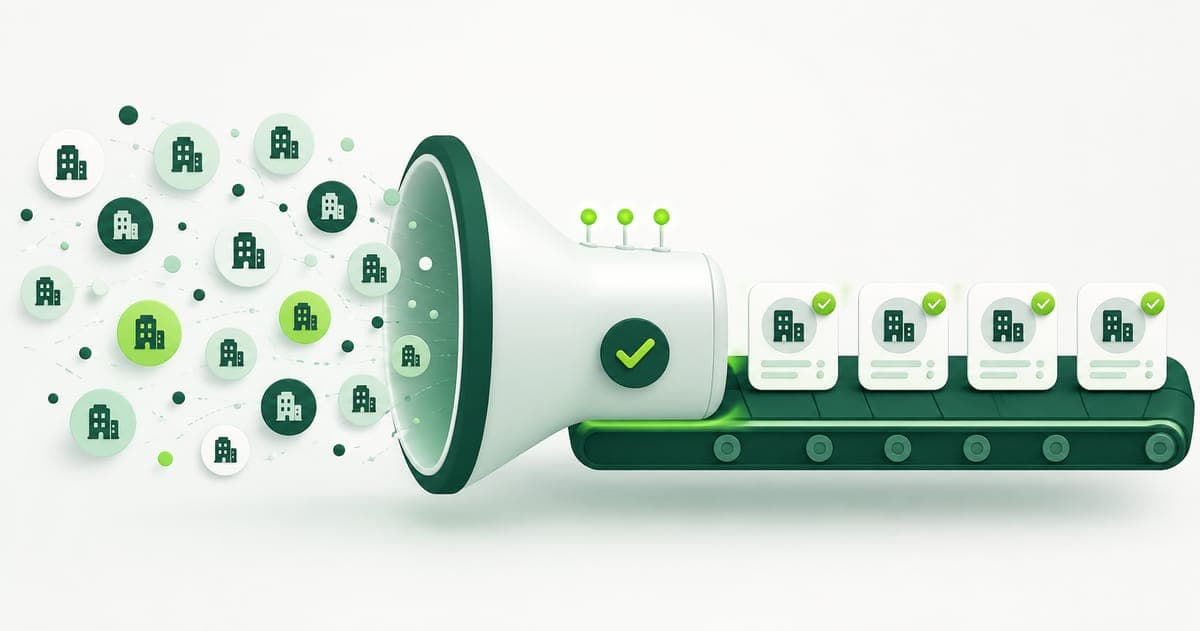
Instead of dialing through a list, you research the context per company: what do they do, who decides, why now? That preparation makes the outreach relevant and the conversations better. Research is the step with the highest leverage and at the same time the one most people skip, because it looks like work. That is exactly why it works: a concrete, verifiable hook in the first sentence instantly sets you apart from the next generic sales message. The important part is that the hook is real. Faked personalization gets noticed and does more harm than good.
Multichannel outreach
No channel wins alone. The combination of email, LinkedIn and the phone, cleanly aligned, creates the necessary touchpoints without being intrusive.
- Email for the thoughtful first contact with a clear hook.
- LinkedIn for visibility and a second, more personal touch.
- The phone where the offer is complex and the decision-maker is reachable.
- Consistent but respectful follow-up instead of one-off attempts.
Where AI really helps in sales
Artificial intelligence is changing B2B sales, but not the way many fear. It does not replace the salesperson, it takes the time-consuming groundwork off their plate: research, scoring, preparation. The biggest time saving is in research. Instead of searching each company by hand, AI summarizes public information, finds contacts and delivers context, with sources, so you can check the result. An AI fit score additionally rates how well a company fits your profile and prioritizes your list automatically. That leaves more time for what humans do better: listening and persuading.
Personalization that scales
It used to be a choice: either personal or scalable. AI shifts that boundary. From real research results, the subject line and opening can be personalized per recipient, in minutes rather than hours. That keeps the outreach relevant even at high volume. The decisive thing is that the personalization rests on real facts and not on invented details. Good tools reveal where a piece of information came from, so you do not send anything false. The human keeps the final decision over every message, AI delivers the draft and the research behind it.
What you should automate and what you should not
Automating sales does not mean replacing people with robots, it means taking over the same repetitive, time-consuming steps so there is more time for real conversations. Some steps are perfect for this, others belong in human hands.
- Good to automate: research, enrichment with a fit score, the sending and timing of sequences, follow-up reminders and stopping on reply.
- Should stay human: responding to a reply, the actual relationship, the offer and the close.
Misunderstood, automation leads to generic spam, used right it leads to more relevant contacts. The line runs where preparation turns into a real conversation.
The right tool stack
The market for sales software is crowded: databases, outreach tools, CRMs, enrichment services. Many teams patch together an expensive stack from these, one where data gets lost between the tools. The better question is not which tool has the most features, but which one maps your acquisition process end to end. A platform that brings research, enrichment and outreach together delivers cleaner data and better follow-up than a patchwork of point tools. Smaller teams in particular benefit, because they do not have to maintain an expensive stack and lose no time to interfaces and data breaks.
Do not forget deliverability
Automated sending with no regard for reputation burns the domain. Anyone who sends from their own mailbox, ramps the volume up slowly over weeks and only contacts fresh, verified data keeps deliverability high while scaling. For international and EU-facing teams in particular, EU hosting with a data processing agreement and clean sending are often more decisive than another filter option. These two points are regularly overlooked in tool selection, but they bite back fast when messages suddenly land in spam and the painstakingly built reputation is gone.
Pipeline and follow-up
Without follow-up, opportunities leak away. Record which phase a lead is in and what the next step is. What matters is not a perfect tool, but that no promising contact gets lost. A clean pipeline also shows you where in the process leads get stuck, and so makes visible where you need to improve. That transparency is the difference between a sales team that relies on gut feeling and one that improves its results step by step.
The handoff from marketing to sales
In many companies the biggest loss of momentum happens exactly at the seam between marketing and sales. Marketing generates attention and inquiries, sales is supposed to turn them into deals, yet often there is no clear definition of when a contact is ready for the handoff. The result is lost leads and mutual blame. A clean solution starts with a shared definition: which traits make a lead sales-ready, and what exactly happens at the handoff? When both sides speak the same language and apply the same criteria, less gets lost, and no promising contact falls through the cracks between responsibilities.
Qualify leads properly
Not every contact deserves the same amount of time. Qualification separates the leads where the effort pays off from those that do not fit anyway. Known frameworks like BANT check budget, authority, need and timeline, but they are only a starting point. More important than a rigid scheme is asking the right questions early: does the company really have the problem, is the person able to decide or involved, and is there a concrete reason to act now? Anyone who qualifies honestly wastes less time on hopeless conversations and can put the freed-up energy into the genuinely promising opportunities.
Discovery: ask the right questions
The first real conversation decides a lot. Anyone who just recites their pitch here squanders the most valuable chance to understand the other person. Good discovery flips that around: you ask more than you tell. The goal is to find out which problem really hurts, what it costs to leave it unsolved, and what a solution would have to look like. Open questions, real listening and following up bring more to light than any product demo. Only once you understand the problem in the customer's own words can you show how your offer fits. This step turns a salesperson from a presenter into an advisor people listen to.
Handle objections in the sales conversation
Objections are not an obstacle, they are a sign of interest. Anyone who asks no questions has usually already closed the door internally. The most common objections concern price, timing and comparison with alternatives. The right approach is not to talk them away, but to take them seriously and understand what lies behind them. Behind too expensive there is often a benefit that was not understood well enough, behind no time a missing urgency. Anyone who asks calmly instead of immediately justifying uncovers the real reason and can address it. That turns a supposed no into a not yet, which can be resolved with the right next step.
Offer and close
A good offer sums up what was worked out in the conversation and translates the benefit into the customer's language. It is not a product list, it is an answer to the understood problem. At the close, clarity counts: an unambiguous next step, a realistic timeline and no artificial scarcity that costs trust. Pressure rarely leads to the goal in B2B, because several people are usually involved and rushed decisions fall apart later. It is better to understand the customer's decision process and actively accompany it rather than push. A cleanly prepared close feels to both sides like the logical next step, not like an ambush.
Customer retention and referrals
The close is not the end, it is the beginning. Keeping existing customers is cheaper than winning new ones, and satisfied customers are the best source of referrals and repeat business. Anyone who maintains the contact after the sale, delivers real value and solves problems quickly builds relationships that carry beyond individual orders. Referrals do not happen on their own, they happen because someone is excited enough to link their name with yours. You earn that excitement after the close, not before. A systematic sales approach therefore thinks beyond the first sale and treats every customer as a potential advocate.
Sales metrics that actually matter
Many teams measure activity instead of results. The number of messages sent says little as long as it does not lead to conversations. More telling are the conversion rates between phases: from outreach to reply, from reply to conversation, from conversation to offer, from offer to close. This chain shows where opportunities are lost and makes visible where an improvement has the biggest leverage. Add to that the length of the sales cycle and the average deal value. Anyone who tracks these few numbers consistently steers their sales with facts instead of gut feeling and spots problems before they dry up the pipeline.
Where Firmeo comes in
Firmeo covers the start of the process, the part that decides everything downstream: find fitting companies live, checked against the website, research them with AI, sources and a fit score and reach out over email and LinkedIn from your own mailbox, with volume ramp-up and a stop on reply, EU-hosted and GDPR-compliant. Research, enrichment and outreach run in one platform instead of an expensive tool stack, credit-based instead of per seat. That way your sales starts with qualified, prepared conversations, and you keep control over every message.
Conclusion
Modern B2B sales is no secret and no talent, it is a process you can learn and improve. It starts with a sharp ideal customer profile, runs through thorough research and relevant multichannel outreach to genuine qualification, thoughtful discovery and a close that feels right to both sides. AI and automation are not a threat here, they are tools: they take over the time-consuming groundwork and create room for what humans do better, namely listen, understand and persuade. The right tool stack holds this process together instead of tearing it across five point solutions.
Anyone who understands sales this way stops betting on gut feeling and starts turning the right dials. The conversion rates between phases show where opportunities are lost and make every improvement measurable. Just as important is thinking beyond the first close: satisfied customers are the best source of repeat business and referrals. In the end the winner is not whoever sells the loudest, but whoever prepares, measures and refines their process most consistently. Such a sales operation does not grow in leaps and accidents, it grows steadily and predictably, and that is exactly the decisive advantage in B2B.